Like a
crystal-clear stream of liquid elegance, the
Martini Cocktail has flowed through decades of cocktail culture as the
quintessential sophisticated drink. You’ve probably seen James Bond order his “shaken, not stirred,” but there’s much more to crafting the perfect Martini than following 007’s preference. Whether you’re drawn to the
classic gin version or prefer a modern vodka variation, you’ll find that mastering this iconic cocktail isn’t just about mixing spirits—it’s about understanding the
subtle interplay of temperature, dilution, and aromatics that’ll transform your home bartending game. Let’s uncover the secrets behind this deceptively simple yet endlessly debated cocktail.
Main Points
- Mix 2½ oz gin or vodka with ½ oz dry vermouth in a mixing glass filled with ice cubes.
- Stir mixture smoothly for 30 seconds until well-chilled, using a bar spoon against the glass edge.
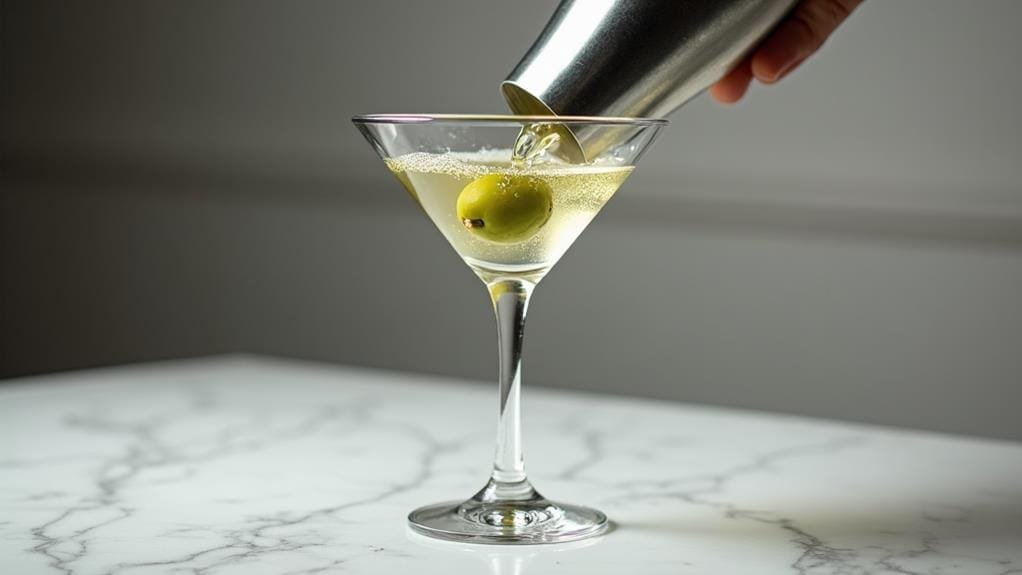
- Strain into a pre-chilled martini glass using a fine-mesh strainer to prevent ice chips.
- Garnish with three green olives or a lemon twist, and optionally add a dash of orange bitters.
- Serve immediately while frost appears on glass, ideally at 28°F for maximum refreshment.
History
Legend has it that the
Martini emerged during the
California Gold Rush in the 1860s, though its exact origins remain disputed.
You’ll love knowing that prospectors would stop at Martinez, California, where a bartender mixed up this magical concoction of gin and vermouth for weary travelers. It’s like the cocktail equivalent of striking gold!
As you explore Martini variations through the decades, you’ll discover how this drink evolved from its
sweet vermouth beginnings to today’s
drier style.
In the roaring 1920s, the Martini became the ultimate
symbol of sophistication, with
cocktail etiquette dictating precise rules about everything from glass temperature to garnish placement.
You won’t believe how particular some aficionados became – they’d even count the number of times their drink was stirred!
During the mid-20th century, the Martini got a major boost from pop culture, especially
James Bond‘s famous “shaken, not stirred” preference.
While purists might clutch their pearls at the thought, this catchphrase helped cement the Martini’s status as the
king of cocktails.
Whether you’re a gin traditionalist or a vodka modernist, you’re participating in a ritual that’s been perfected over 150 years!
Recipe
A
classic Martini represents the epitome of
cocktail sophistication, combining the botanical notes of
gin (or the clean profile of
vodka) with the subtle complexity of
dry vermouth. When properly prepared, this iconic drink delivers a
crisp,
cold, and
refined experience that has captivated cocktail enthusiasts for generations.
The key to crafting the
perfect Martini lies in the precise
balance of ingredients and the careful attention to
temperature and technique. Whether one prefers it bone dry or with a traditional vermouth ratio, the preparation method remains consistent, focusing on achieving the ideal chill and dilution while maintaining the drink’s clarity and silky texture.
- 2½ oz London dry gin or premium vodka
- ½ oz dry vermouth
- 3 green olives
- 1 dash orange bitters (optional)
- 1 lemon twist (optional)
- Ice cubes for mixing
Begin by chilling a Martini glass either in the freezer or by filling it with ice water. Fill a
mixing glass with
fresh ice cubes and add the gin (or vodka) and dry vermouth. Stir gently for approximately 30 seconds until well-chilled, then strain the mixture into the chilled Martini glass.
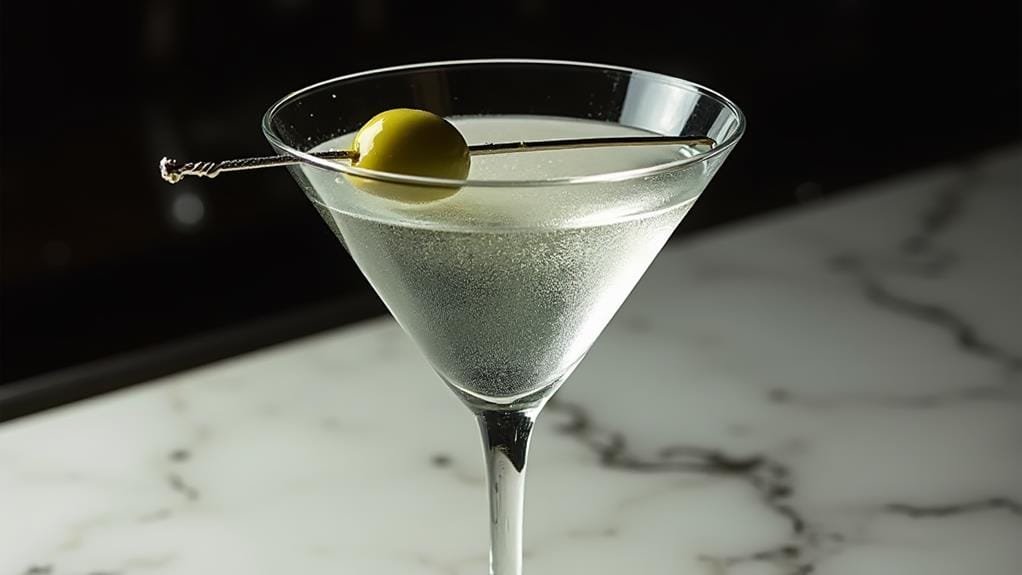
Garnish with either three olives on a cocktail pick or a lemon twist, and if using orange bitters, add them before stirring.
Temperature management is essential throughout the preparation process. The mixing glass should be chilled beforehand, and the ice used should be fresh and solid to prevent excessive dilution. The stirring technique should be smooth and consistent, allowing the drink to reach the proper temperature while maintaining its clarity and avoiding over-dilution.
The choice and storage of vermouth greatly impact the final result. Always use fresh vermouth that has been properly refrigerated after opening, and discard it after one month. For those who prefer their Martini extra dry, the vermouth can be reduced to a mere rinse of the glass, while those seeking a more traditional profile can maintain the classic ratio.
Remember that different gins will produce distinctly different results, so experimentation with various brands may be necessary to find your perfect combination.
Cooking Steps
You’ll want to start by chilling both your
mixing glass and martini glass, because a warm martini is like serving ice cream on a hot sidewalk.
Next, combine your perfectly measured spirits and vermouth over
fresh ice cubes, stirring with the graceful precision of a conductor leading an orchestra – about 30 seconds should do it.
Step 1. Chill Glassware First
Before preparing any ingredients,
properly chilled glassware is essential for crafting the
perfect Martini. Your cocktail’s glass temperature plays an important role – after all, nobody wants their carefully crafted drink to warm up faster than a snowman in July!
You’ve got two
foolproof chilling techniques that’ll guarantee success every time.
The first method, which you’ll love for its simplicity, involves placing your Martini glasses in the freezer for at least 15 minutes before mixing. If you’re a frequent Martini enthusiast, consider keeping a
dedicated glass or two in there permanently – you’ll thank yourself later!
The second approach, perfect when you’re in a
time crunch, requires filling your glasses with ice water while you prep the other ingredients. Make sure you
fill them to the brim and let them sit for about 5 minutes, then dump the water just before pouring your cocktail.
Step 2. Add Spirits and Vermouth
The
perfect Martini begins with precise measurements and quality ingredients. Your spirit selection sets the foundation for this legendary cocktail, so don’t skimp on quality – reach for a
premium London dry gin or top-shelf vodka that’ll make your taste buds sing with joy.
Now, here’s where the magic happens! Pour 2½ ounces of your chosen spirit into a
mixing glass that’s already filled with pristine ice cubes.
Next, it’s time to add the vermouth – that mysterious fortified wine that transforms your drink from plain alcohol into
liquid elegance. For a classic Martini, you’ll want ½ ounce of
dry vermouth.
If you’re feeling adventurous,
experiment with different vermouth types to discover your perfect match. Think of vermouth as your spirit’s dancing partner – too much overwhelms, too little leaves your drink lonely!
Step 3. Stir Mixture With Ice
With your spirits and vermouth now mingling in the ice-filled
mixing glass, it’s time to master the art of
proper stirring. Grab your
bar spoon and get ready to create
cocktail magic – because, trust me, your stir technique can make or break this classic drink!
Let’s talk
ice selection first: you’ll want
fresh, solid cubes that haven’t started melting. Those sad, half-melted ice bits from the bottom of your freezer? They’re your Martini’s worst nightmare!
Now, insert your bar spoon along the glass’s edge, keeping the back of the spoon against the glass. Here’s where the real fun begins – you’re going to stir smoothly and consistently for exactly 30 seconds, no cheating! Think of yourself as a gentle mixologist conductor, leading an orchestra of flavors.
The goal is to achieve
perfect dilution and temperature without creating those pesky air bubbles that’ll cloud your drink. Move the spoon in a fluid, circular motion, letting the ice dance around the glass without clinking or splashing.
You’ll know you’re done when the mixing glass feels properly chilled and your arm’s got a nice little workout!
Step 4. Strain Into Serving Glass
After achieving the
perfect chill and dilution, it’s time for the most
precise moment in Martini-making – the
strain.
You’ll want to hold your fine-mesh strainer steadily over your pre-chilled Martini glass, making certain there’s not a single ice chip that sneaks through. Like a diamond cutter focusing on the perfect angle, you’ll need to pour with purpose and precision.
For different martini variations, you might adjust your straining technique slightly. A
dirty Martini needs extra attention to guarantee olive brine doesn’t cloud the final presentation, while a Gibson requires
crystal clarity to showcase its pearl-like cocktail onion.
Position your strainer at a 45-degree angle and pour smoothly – you’re not just straining, you’re conducting liquid symphony!
Before moving on to
garnishing techniques, take a moment to admire how the cocktail cascades into the glass, creating that signature silky surface.
If you notice any
unwanted particles, don’t panic – simply strain again through a finer mesh.
Step 5. Add Garnish and Bitters
Finishing touches make or break your Martini’s presentation and flavor profile. It’s time to elevate your cocktail from good to spectacular with the
perfect garnish and that
magical dash of bitters that’ll make your taste buds dance!
For garnish options, you’ve got two
classic choices that’ll transform your drink into a work of art. Thread three plump, green olives onto a cocktail pick – they’re not just pretty to look at, they’ll infuse your Martini with a subtle brine that cocktail lovers crave.
Or, if you’re feeling bright and citrusy, twist a
fresh lemon peel over the drink’s surface, releasing those aromatic oils that’ll float like a fragrant cloud above your glass.
When it comes to bitters types,
orange bitters are your best friend here. Just one dash – that’s all you need! They’ll add
depth and complexity that’ll make your Martini sing.
Think of bitters as the
secret conductor of your cocktail orchestra, bringing all the flavors into perfect harmony. Don’t skip this step if you want to experience the full symphony of flavors that a properly garnished Martini can deliver!
Step 6. Serve Promptly When Chilled
Ice-cold perfection demands
immediate service – your Martini’s ready to shine! The moment you’ve finished stirring and straining this
elegant cocktail, it’s in a race against time and temperature. Don’t let your masterpiece lose its
magical chill!
Here’s why temperature importance can’t be overstated: your
perfectly chilled Martini will start warming up the second it hits the glass. Like a graceful ballerina on a timer, you’ll want to serve immediately to capture that pristine moment when every sip delivers maximum refreshment. You wouldn’t serve a hot ice cream sundae, right? Same principle applies here!
Watch as the
frost forms delicately on the outside of your glass – that’s your signal that everything’s perfect. And please, don’t even think about letting your Martini sit around while you finish other tasks! This isn’t some casual rum and coke we’re talking about; it’s the
sophisticated superstar of the cocktail world.
The moment that crystal-clear liquid hits the
perfect serving temperature (right around 28°F), it’s
showtime! Your guests should be ready and waiting, because this drink waits for no one.
Is the Martini Cocktail Recipe Similar to the Cosmopolitan Cocktail Recipe?
The Martini cocktail recipe and the Cosmopolitan cocktail recipe tutorial are different in terms of ingredients and flavors. While the Martini consists of gin and vermouth, the Cosmopolitan includes vodka, cranberry juice, and triple sec. Despite both being classic cocktails, they have distinct tastes and characteristics.
Wrapping Up
The
perfect Martini comes down to mastering a few essential elements: precise measurements,
quality ingredients,
proper temperature control, and
careful technique.
Once you’ve got these basics down, you’ll be ready to explore countless
Martini variations and impress your guests with your
cocktail etiquette.
Remember, there’s no shame in experimenting until you find your ideal recipe – whether you’re a die-hard gin purist or prefer the smoothness of vodka.
Your perfect Martini might be
bone-dry with just a whisper of vermouth, or you might enjoy it “wet” with a more
generous pour. The garnish you choose – be it a briny olive or a bright twist of lemon – adds that final touch of personality to your creation.
Most importantly, don’t let anyone tell you there’s only one “right way” to enjoy this classic cocktail.
The best Martini is the one that makes you smile, whether it’s shaken like Bond’s or stirred like a traditionalist’s.
Now that you’ve mastered the essentials, you’re ready to join the ranks of sophisticated Martini enthusiasts who’ve been debating the perfect recipe for over a century.