You’ve likely encountered the
French 75 at upscale bars or elegant celebrations, where its
champagne bubbles and gin-forward profile command attention. This sophisticated cocktail, born in the trenches of World War I, carries both
historical significance and modern appeal that’ll elevate your home bartending repertoire. While it’s true that combining spirits with champagne requires a delicate balance, you’ll find the French 75’s preparation surprisingly approachable. As we explore this classic recipe’s nuances and techniques, you’ll discover why this powerful yet refined drink has maintained its status in
cocktail culture for over a century.
Main Points
- Combine 1 oz London dry gin, 1/2 oz fresh lemon juice, and 1/2 oz simple syrup in an ice-filled shaker.
- Shake mixture vigorously for 10-15 seconds until shaker is ice-cold, then strain into a chilled champagne flute.
- Top with 4-5 oz chilled champagne or sparkling wine, pouring slowly to maintain effervescence.
- Garnish with a lemon twist, expressing the oils over the drink’s surface for enhanced aroma.
- Ensure all ingredients are properly chilled beforehand, including the champagne flute, for optimal serving temperature.
History
The
French 75 emerged during
World War I at
Harry’s New York Bar in Paris, where bartender Harry MacElhone first mixed this
powerful cocktail.
The drink’s cocktail origins are as explosive as its namesake – the French military’s legendary 75mm field gun, which packed such a punch that soldiers would joke about its knockout power.
You’ll love knowing that this drink’s
military inspiration came from the way it hits you – just like the artillery piece that helped win the war! The combination of gin, champagne, and citrus was so potent that American soldiers, who’d frequent Harry’s Bar while stationed in Paris, claimed it felt like being shelled by the famous French 75 field gun.
They weren’t kidding – this drink sneaks up on you with the same stealth and impact as its namesake weapon!
What started as a soldier’s powerful pick-me-up has evolved into one of the world’s most celebrated
champagne cocktails.
You’re not just drinking a cocktail when you sip a French 75; you’re tasting a
piece of history that’s been delighting adventurous drinkers for over a century!
Recipe
The
French 75 is a
classic cocktail that combines the botanical notes of
gin with the bright acidity of
fresh lemon juice, balanced by
simple syrup and topped with
champagne‘s effervescence. This
World War I-era drink earned its name from the French 75mm field gun, as it was said to hit with similar force.
This elegant cocktail requires
precision in its preparation to achieve the perfect balance of flavors. The key lies in using
high-quality ingredients and ensuring proper
temperature control throughout the mixing process, resulting in a sophisticated drink that’s both invigorating and celebratory.
- 1 oz London dry gin
- 1/2 oz fresh lemon juice
- 1/2 oz simple syrup
- 4-5 oz chilled champagne or sparkling wine
- Ice cubes
- Lemon twist for garnish
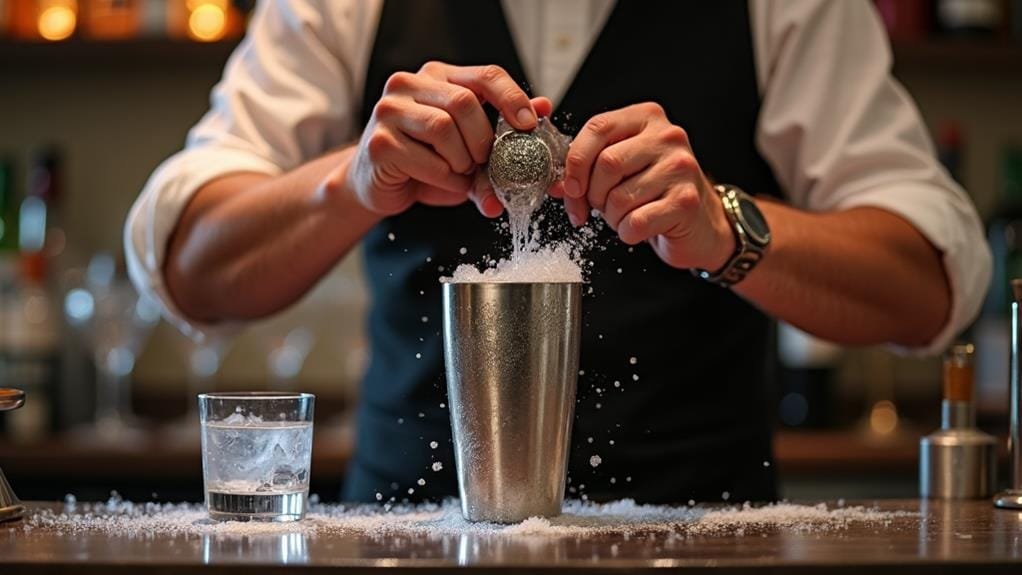
Fill a cocktail shaker with
ice cubes. Add gin, fresh lemon juice, and simple syrup to the shaker. Shake vigorously for 10-15 seconds until well-chilled. Strain the mixture into a chilled champagne flute. Top slowly with cold champagne or sparkling wine, being careful not to overflow.
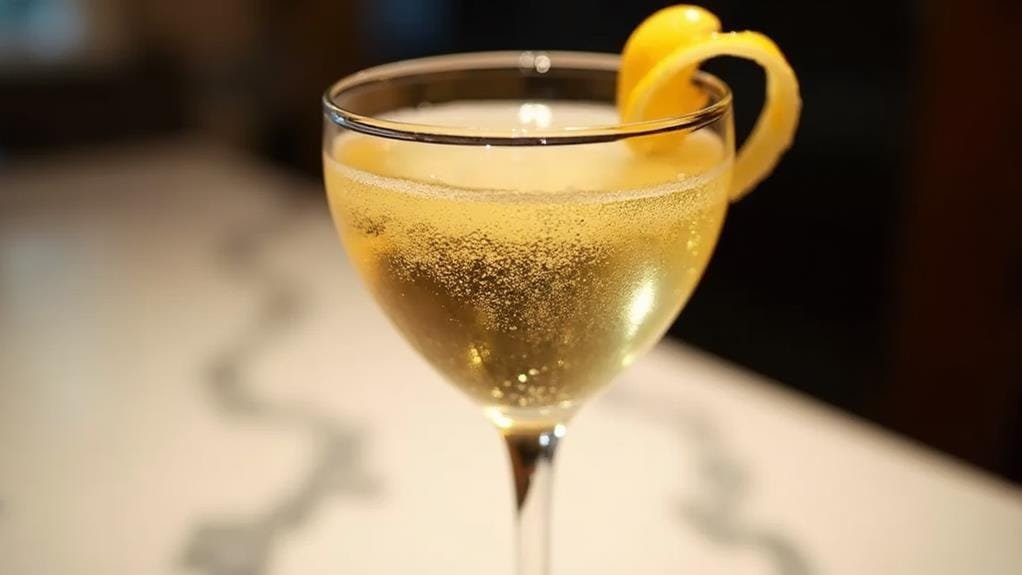
Garnish with a lemon twist and serve immediately.
Temperature is essential when preparing a French 75. All ingredients should be properly chilled before mixing, especially the champagne. The cocktail shaker should be filled with fresh, hard ice cubes rather than crushed ice, which can dilute the mixture too quickly.
When shaking, the goal is to achieve proper dilution and temperature without over-diluting the mixture. For the best results, use
freshly squeezed lemon juice and make simple syrup at home by combining equal parts sugar and water, heating until dissolved, then cooling completely.
While true champagne is traditional, high-quality prosecco or cava can be substituted. The lemon twist should be cut from fresh fruit, avoiding the bitter white pith, and should be twisted over the drink to release the essential oils before being added as garnish.
Cooking Steps
You’ll want to start with properly
chilled ingredients, making sure your gin, lemon juice, and champagne are all as cold as a penguin’s toes.
Next, fill your
cocktail shaker with ice, add your gin and mixers (that’s the lemon juice and simple syrup), and shake it like you’re trying to wake up your roommate after they’ve slept through three alarms.
Step 1. Chill All Ingredients First
Before mixing your French 75, properly
chill all ingredients to guarantee best results and a
truly invigorating cocktail. Your cocktail preparation begins well before the first pour, as
warm ingredients will quickly dilute and diminish the drink’s
signature fizzy charm.
Trust me, there’s nothing worse than a lukewarm French 75 – it’s like serving caviar on a paper plate!
For
perfect ingredient selection and temperature control, place your gin bottle in the refrigerator at least two hours before mixing. Your champagne or sparkling wine should be
thoroughly chilled as well, ideally between 45-48°F (7-9°C).
Don’t forget about your fresh lemon juice –
pop it in the fridge right after squeezing! Even your simple syrup needs to cool its heels in the refrigerator, as warm syrup can instantly kill those precious bubbles you’re working so hard to preserve.
And here’s a pro tip that’ll make you feel like a
cocktail genius: chill your champagne flute in the freezer for about 15 minutes before serving.
When everything’s properly chilled, you’ll create a French 75 that’s crisp, invigorating, and absolutely spectacular!
Step 2. Fill Shaker With Ice
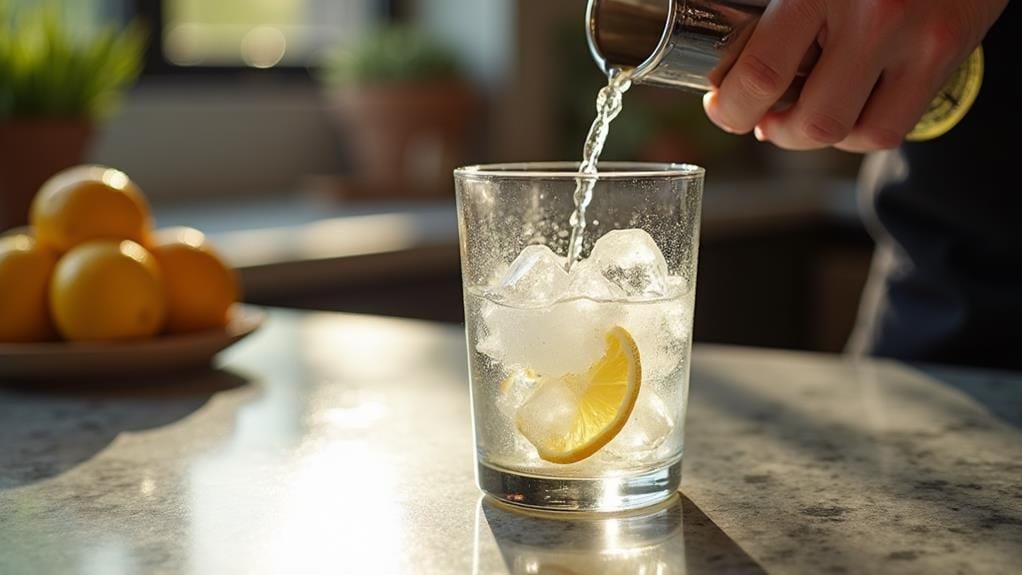
Now that your ingredients are properly chilled, filling your
cocktail shaker with
ice marks the start of crafting your
French 75.
Whether you’re using a Boston shaker (that classic two-piece marvel) or a cobbler shaker (the three-piece wonder), you’ll want to fill it about two-thirds full with fresh, clean ice cubes – think of it as building a frosty fortress for your future cocktail!
Don’t skimp on the ice – it’s not just about making your drink cold, it’s about creating that perfect
dilution that’ll make your French 75 sing like a symphonic masterpiece.
You can use standard ice cubes, but if you’re feeling fancy, large-format cocktail ice or even crushed ice will work (though crushed ice will dilute your drink faster than a snowman melting in July).
For the absolute best results, avoid those half-moon ice cubes from your refrigerator’s ice maker – they tend to shatter during shaking and can water down your drink too quickly.
Step 3. Add Gin and Mixers
The
precise measurement of ingredients makes or breaks a French 75, so let’s start by adding 1 ounce of London dry gin, followed by 1/2 ounce each of
fresh lemon juice and
simple syrup to your ice-filled shaker.
While precision matters, don’t stress too much – you’re crafting a cocktail, not defusing a bomb!
When it comes to gin varieties, you’ve got options that’ll make your taste buds dance. Traditional London dry gin works beautifully, but you might want to experiment with
botanical-forward gins or even citrus-infused varieties that’ll complement that zippy lemon juice.
Speaking of mixer alternatives, while fresh lemon juice is non-negotiable (seriously, don’t even think about reaching for that bottle of pre-squeezed stuff!), you can play around with your sweetener. Try
honey syrup for a floral touch, or lavender simple syrup if you’re feeling fancy – just keep the proportions the same.
Step 4. Shake Vigorously Until Cold
Along with your
ice-filled shaker, grab those just-added ingredients and
shake them vigorously for 10-15 seconds. Your shaker technique matters here – you’re not just mixing drinks, you’re creating magic!
Think of yourself as a
cocktail conductor, orchestrating a beautiful symphony of gin, lemon, and syrup until they’re
perfectly harmonized and frosty cold.
Here’s a key cocktail tip: you’ll know you’re shaking correctly when the outside of your shaker feels
ice-cold to the touch, like holding a snowball in July!
Don’t be shy about putting some muscle into it – imagine you’re rocking out to your favorite song, but instead of air guitar, you’re wielding a cocktail shaker. The ice should be dancing inside that shaker like it’s at its own private party.
Keep a firm grip on both parts of your shaker (trust me, no one wants their French 75 ingredients decorating their ceiling!), and listen for that
distinctive rhythmic sound of ice hitting metal.
When
condensation forms on the outside of your shaker, you’re right where you need to be – perfectly chilled and ready for the next step.
Step 5. Strain Into Champagne Flute
Getting your
perfectly chilled mixture into the
champagne flute requires steady hands and careful attention to detail. Position your
cocktail strainer firmly against the shaker’s rim, and with the grace of a surgeon, slowly pour the mixture into your
elegant flute. You’ll want to leave enough room for the champagne – about two-thirds of the glass should remain empty.
Now, here’s where you can get creative with cocktail variations! While the classic recipe calls for a straight pour into the flute, some mixologists love using a
fine-mesh strainer for an extra-smooth result. If you’re feeling fancy, try the
double-strain technique by holding both strainers at different angles – it’s like giving your drink a silk robe to wear!
For garnish techniques, don’t just plop that lemon twist on top; instead, gently
express the oils over the drink’s surface and run the peel around the rim. You’ll notice tiny droplets of citrus essence dancing on top of your cocktail, creating a
magical, aromatic experience that’ll make your guests go “Wow!”
Trust me, these little details transform a good French 75 into an absolutely magnificent one.
Step 6. Add Champagne And Garnish
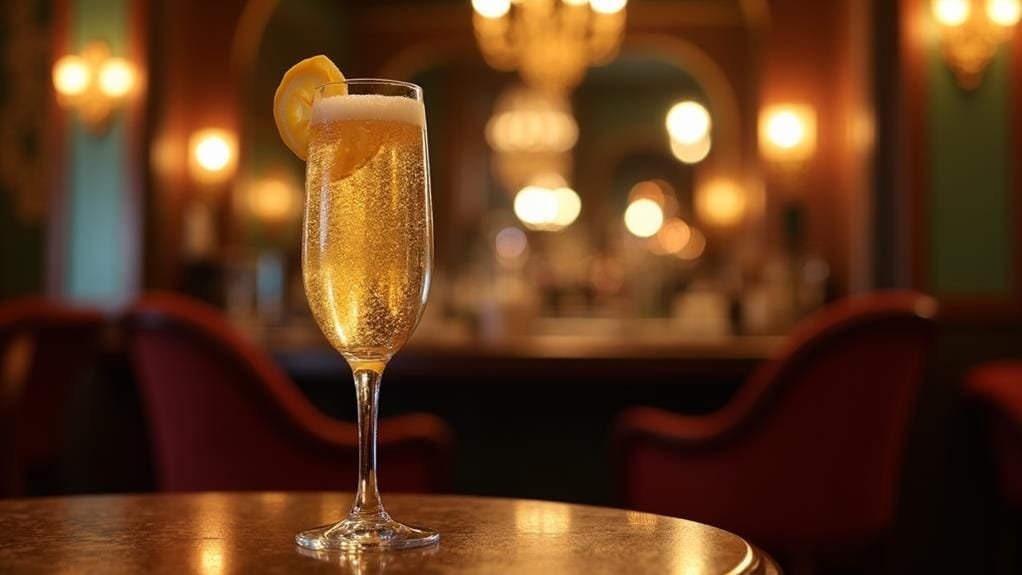
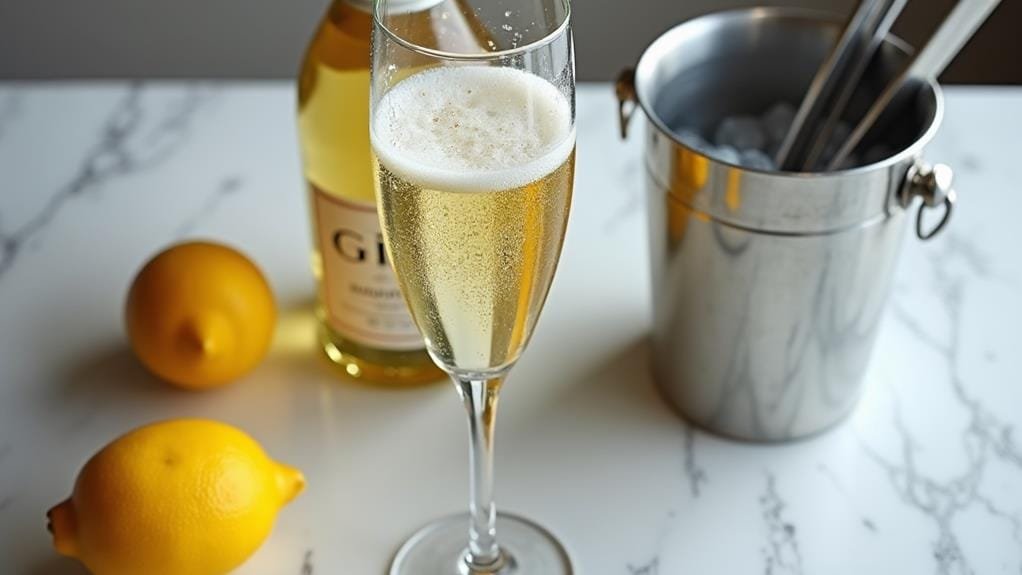
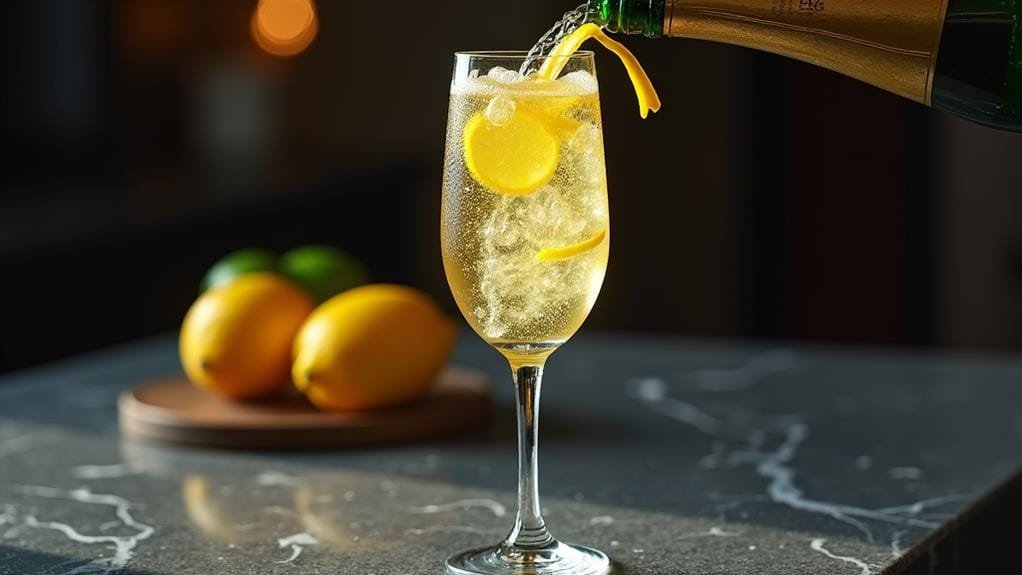
Carefully pour your
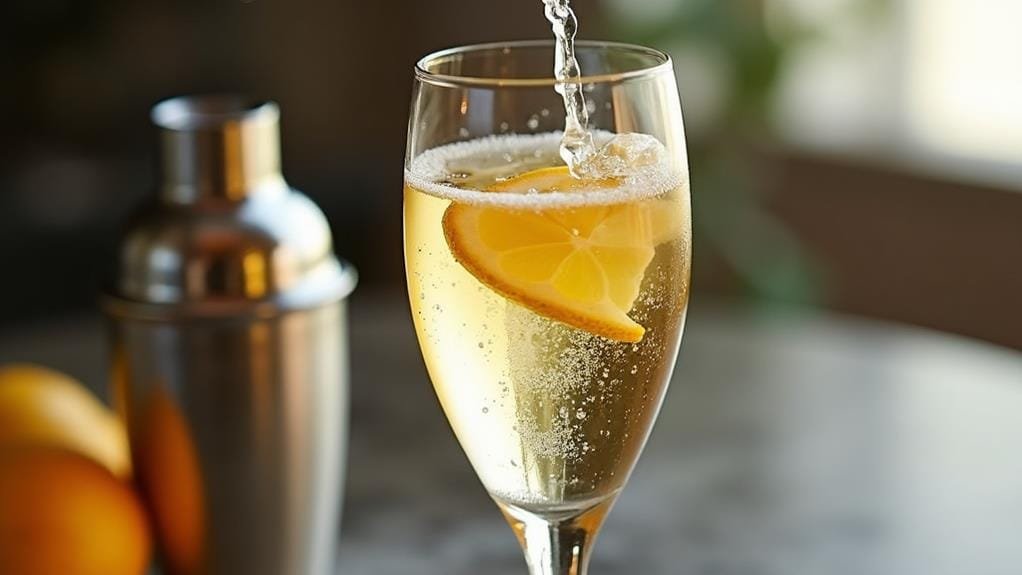
chilled champagne into the flute at a slight angle, allowing it to gently cascade down the side of the glass to preserve the bubbles.
When it comes to champagne varieties, you can’t go wrong with
true French champagne, but don’t feel bad about using a
quality prosecco or cava – they’ll give you that same magical fizz without breaking the bank! Fill until the bubbles rise dramatically to the top, creating that
gorgeous, celebratory effect that makes this cocktail so special.
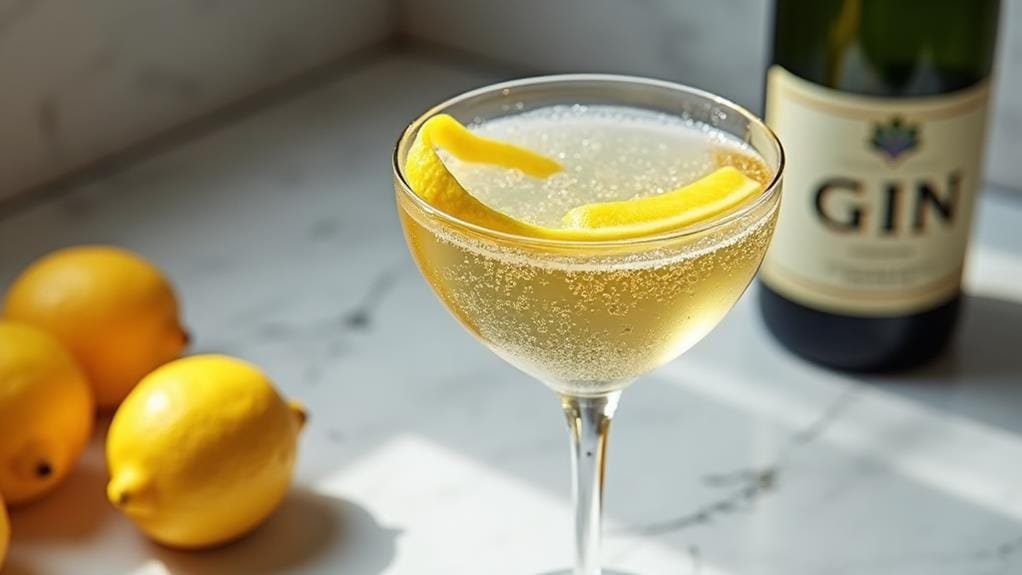
Now for the finishing touch – let’s talk garnish techniques! Take your lemon twist and give it a good squeeze over the drink to release those
aromatic oils (trust me, it’s like adding a burst of sunshine to your glass).
Then, run the
twisted peel around the rim before draping it elegantly over the edge of your flute. You’ll want to avoid getting any of that bitter white pith in there – we’re going for sophisticated, not sour faces!
Watch as those
tiny bubbles dance upward through the golden liquid, carrying your perfectly twisted lemon garnish to new heights.
What Makes the French 75 Cocktail Different from the Old Fashioned Cocktail?
The French 75 cocktail and the Old Fashioned cocktail are both classic cocktail recipes, but they are quite different. The French 75 is a refreshing and bubbly gin-based drink, while the Old Fashioned is a strong and smoky whiskey-based cocktail. Each has its own unique flavor profile and character.
Wrapping Up
The
French 75 cocktail stands as a demonstration to
elegant mixology, combining the
botanical notes of gin with champagne’s effervescent luxury.
You’ll find that mastering this classic drink opens up a world of cocktail variations, from swapping gin for cognac to experimenting with different
sparkling wines.
When you’re ready to show off your mixology skills, serve this dazzling creation at brunches, weddings, or any celebration that calls for a touch of sophistication.
Remember, your French 75 is only as good as its ingredients, so don’t skimp on quality!
You’ll want to keep your serving suggestions in mind too – present this beauty in a
champagne flute to showcase those
mesmerizing bubbles dancing their way to the surface.
For an extra special touch, you can prep your garnishes ahead of time, creating perfect
lemon twists that’ll make your cocktails Instagram-worthy.
Whether you’re hosting an elegant soirée or simply treating yourself to something special, you’ve now mastered a drink that’s been impressing people for over a century.
Cheers to you – you’re now part of a long tradition of
sophisticated sipping!