You might be surprised to learn that the
Espresso Martini emerged from a simple request by a supermodel who walked into a London bar asking for something that would “wake me up and mess me up.” Bartender
Dick Bradsell‘s creative response to this challenge has since evolved into one of the most sought-after cocktails in upscale establishments worldwide. If you’ve ever wanted to master this
sophisticated blend of caffeine and spirits at home, you’ll find that creating the
signature crema top isn’t as intimidating as it seems—and the secret lies in more than just the ingredients.
Main Points
- Combine 2 oz vodka, 1 oz fresh espresso, 3/4 oz coffee liqueur, and 1/2 oz simple syrup in a cocktail shaker.
- Shake mixture vigorously for 20 seconds with ice to create signature foam and proper dilution.
- Double strain into a chilled martini glass to ensure smooth texture and optimal presentation.
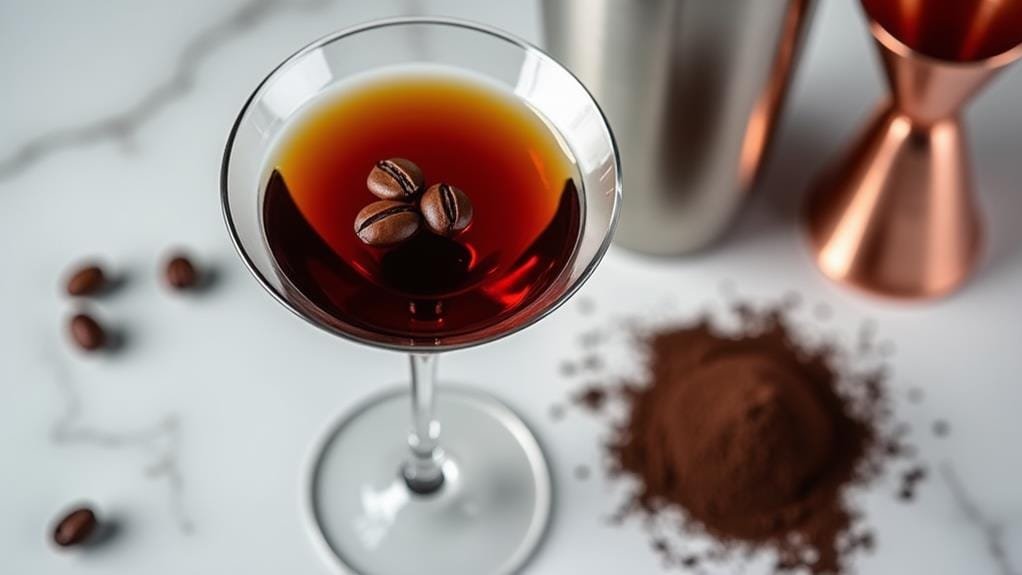
- Garnish with three coffee beans in a triangle pattern, symbolizing health, wealth, and happiness.
- Use high-quality, chilled ingredients and glassware for the best flavor and temperature control.
History
A late-night request from a
supermodel sparked the creation of the
Espresso Martini in 1983. The story goes that she walked into London’s Soho Brasserie and asked legendary bartender
Dick Bradsell for something that would “wake me up, and then mess me up.” Rising to the challenge, Bradsell combined vodka with fresh espresso and coffee liqueur, unknowingly creating what would become one of the world’s most beloved cocktails.
The historical origins of this drink perfectly captured the
energetic spirit of London’s bustling ’80s
cocktail scene, where glamour met innovation behind every bar.
You’ll love knowing that the cocktail’s evolution throughout the decades has been nothing short of remarkable. What started as a simple pick-me-up has transformed into a sophisticated mix that’s graced the menus of
high-end establishments worldwide.
The drink initially went by the name “Vodka Espresso,” but as
cocktail culture evolved and martini glasses became the vessel of choice, it earned its current, more elegant name.
Today, you’ll find this
caffeinated masterpiece being shaken up in every corner of the globe, proving that great ideas never go out of style.
Recipe
The
Espresso Martini is a
sophisticated cocktail that perfectly balances the rich intensity of
fresh espresso with
premium vodka and
coffee liqueur. When properly crafted, this drink transforms into a luxurious combination of bold coffee flavors, smooth alcohol, and a signature
creamy foam top.
This
modern classic, born in London’s vibrant bar scene of the 1980s, has become a
globally celebrated cocktail that serves both as an elegant aperitif and an energizing after-dinner drink. The key to its success lies in the
quality of ingredients and
precise preparation technique, guaranteeing the ideal balance of sweetness, bitterness, and caffeine kick.
- 2 oz premium vodka
- 1 oz freshly brewed espresso, cooled
- 3/4 oz coffee liqueur
- 1/2 oz simple syrup
- 3 whole coffee beans (for garnish)
- Ice cubes
Fill a cocktail shaker with ice cubes, then add vodka, cooled espresso, coffee liqueur, and simple syrup. Shake vigorously for at least 20 seconds to create the signature foam. Double strain the mixture into a chilled martini glass, and garnish with three coffee beans arranged in a trinity pattern on top of the foam.
Temperature control is essential for achieving the perfect Espresso Martini. Always allow freshly brewed espresso to cool for approximately 5 minutes before mixing, as hot espresso will dilute the drink by melting the ice too quickly. Additionally, chill your martini glass in the freezer for at least 10 minutes before serving to maintain the
ideal drinking temperature.
For the best foam formation, make sure your
shaking technique is vigorous and sustained. The proteins in the espresso need sufficient agitation to create the characteristic creamy foam.
When making multiple drinks, prepare them in batches of no more than two to maintain the quality of both the foam and temperature. The
traditional trinity garnish of three coffee beans not only adds visual appeal but also represents health, wealth, and happiness.
Cooking Steps
You’ll want to start by
chilling your martini glass in the freezer while letting your freshly brewed espresso cool for about 5 minutes, setting yourself up for success right from the start.
Next, combine your vodka, cooled espresso, coffee liqueur, and simple syrup in an
ice-filled shaker, making sure each ingredient is measured precisely for that perfect balance.
Step 1. Chill Martini Glass First
Properly chilled glassware makes all the difference when serving an
espresso martini. Think of it as creating the perfect stage for your cocktail masterpiece – you wouldn’t want to serve this luxurious drink in a warm glass that’ll instantly kill its perfectly crafted temperature and foam!
For
ideal glass chilling, you’ve got two foolproof methods at your disposal. The
quickest approach is to
pop your martini glass in the freezer for 10-15 minutes before you start mixing.
If you’re planning ahead (and you should be!), you can place your glasses in the freezer for up to an hour – they’ll become absolutely frosty, like
mini ice sculptures waiting to cradle your creation.
Alternatively,
fill your martini glass with ice cubes and cold water while you’re preparing other ingredients, then dump it out just before serving.
These serving techniques aren’t just fancy tricks; they’re essential steps that’ll keep your espresso martini
perfectly chilled from first sip to last.
Step 2. Cool Espresso Before Mixing
Fresh espresso requires
careful cooling before mixing your martini, as hot coffee will quickly melt the ice and result in a
diluted, lackluster drink.
Think of it like jumping into a pool – you wouldn’t plunge in right after the water heater’s been running full blast, would you?
To achieve the
perfect espresso temperature, let your freshly pulled shot rest for about 5 minutes after brewing. During this time, you can prep your other ingredients and chill your glass.
If you’re using different brewing methods, like a moka pot or coffee machine, the same rule applies –
patience is your friend! You’ll know your espresso is ready when it’s cool enough to touch the outside of the cup comfortably.
Here’s a pro tip that’ll make your bartending friends jealous: pour your
fresh espresso into a
metal shaker tin (without ice) and swirl it gently for 30 seconds.
The metal acts as a
natural heat conductor, bringing down the temperature quickly without sacrificing that rich, robust flavor you’re after.
Just don’t get too excited and start mixing before it’s properly cooled – trust me, your
taste buds will thank you later!
Step 3. Add Ingredients To Shaker
The precise order and measurement of ingredients makes all the difference when building your
Espresso Martini in the shaker.
Think of yourself as a
cocktail scientist, carefully measuring each component to create the perfect balance of flavors that’ll make your taste buds dance with joy!
Start by filling your shaker about two-thirds full with
fresh, crystal-clear ice cubes – not those cloudy ones hiding in the back of your freezer!
Pour in 2 ounces of your best vodka first, followed by your
cooled espresso (or strong cold brew, if you’re exploring espresso alternatives).
Next, add 3/4 ounce of
coffee liqueur and 1/2 ounce of
simple syrup.
While traditional recipes stick to these measurements, don’t be afraid to explore
cocktail variations by adjusting the sweetness to your liking.
Just remember, like a perfectly choreographed dance, each ingredient plays its part in creating that signature
velvet-smooth texture and luxurious foam crown.
Pro tip: If you’re feeling adventurous, try swapping the vodka for rum or tequila – just don’t tell the cocktail purists I told you that!
Just kidding, experimentation is half the fun.
Step 4. Shake Vigorously Twenty Seconds
Shaking your Espresso Martini requires
power, precision, and stamina to achieve that
signature velvety foam.
Think of yourself as a
caffeinated superhero, because you’ll need to channel some serious energy for the next 20 seconds of your life. Grab that shaker with both hands, hold it firmly at shoulder height, and get ready to rock!
Your shaking techniques matter more than you might think. Start with a
horizontal motion, like you’re trying to wake up those ingredients from their icy slumber.
The key to proper foam creation lies in your dedication to maintaining a
consistent, vigorous rhythm – no slacking off halfway through! You’ll know you’re doing it right when you hear the
ice dancing inside the shaker like a tiny, caffeinated percussion section.
Keep an eye on your watch or count “one-Mississippi” style, because those 20 seconds can feel like forever when you’re giving it your all.
Don’t give up – your arms might burn, but that
perfect layer of crema-like foam will be worth every second of effort.
Step 5. Strain Into Chilled Glass
Pour your
perfectly shaken masterpiece through a
fine-mesh strainer into your pre-chilled martini glass, holding the strainer close to prevent splashing and preserve that
luxurious foam.
You’ll want to maintain those
precious bubbles you’ve worked so hard to create – they’re like tiny soldiers guarding your drink’s sophisticated appearance!
Double-straining is one of those essential espresso techniques that’ll take your cocktail from amateur hour to professional status.
Position your fine-mesh strainer above the glass at a slight angle, and let gravity do its thing.
Watch in amazement as that
silky-smooth liquid cascades into your glass, creating a
gorgeous gradient effect that’ll make your Instagram followers drool!
For foam perfection, you’ll notice the drink settling into three distinct layers: the dark, rich coffee mixture at the bottom, a lighter middle section, and that dreamy, creamy foam crown on top.
Don’t rush this process – let each drop find its way through the strainer naturally.
If you’re seeing those tiny bubbles forming a perfect,
cappuccino-like crema on top, you’ve nailed it!
The surface should be smooth enough to balance those
three coffee beans you’ll add next.
Step 6. Garnish With Coffee Beans
Now comes your final artistic touch – carefully placing
three whole coffee beans in a
triangle formation atop the drink’s
pristine foam surface.
With steady hands and an eye for detail, you’ll want to position these beans while the foam’s still fresh and stable, creating that
classic trinity pattern that’s become synonymous with this sophisticated cocktail.
Don’t just toss those beans on randomly! Your garnish techniques matter here, and there’s actually a beautiful meaning behind this three-bean arrangement.
In cocktail tradition, these beans represent
health, wealth, and happiness – pretty cool, right? You’ll want to place them equidistant from each other, forming a perfect triangle that catches the eye and adds that
professional flair to your drink.
If you’re feeling extra fancy, try gently pressing each bean just slightly into the foam so they won’t slide around when your guest picks up the glass.
Can I Use the Same Ingredients in the French 75 Cocktail for the Espresso Martini Cocktail?
Yes, you can use the same ingredients in the French 75 cocktail recipe for the Espresso Martini cocktail. The French 75 cocktail recipe typically includes gin, lemon juice, simple syrup, and champagne, while the Espresso Martini cocktail calls for vodka, coffee liqueur, and freshly brewed espresso.
Wrapping Up
Mastering the Espresso Martini takes practice, but once you’ve got the technique down, you’ll be crafting this
sophisticated cocktail like a pro.
The key is understanding how each element works together, from the
fresh espresso’s rich bite to the
vodka’s clean finish. Don’t be afraid to explore
cocktail variations or try ingredient substitutions that match your taste preferences – perhaps a vanilla-infused vodka or a different coffee liqueur.
Remember, what makes this drink truly special isn’t just its bold coffee kick or its
perfectly balanced sweetness – it’s the way it brings people together.
Whether you’re hosting a dinner party or enjoying a nightcap, there’s something magical about that first sip of a well-made Espresso Martini. The foam should dance on your tongue like a caffeinated cloud, while the chilled liquid beneath delivers its perfect punch of flavor.
You’ve now got all the tools you need to create this
modern classic.